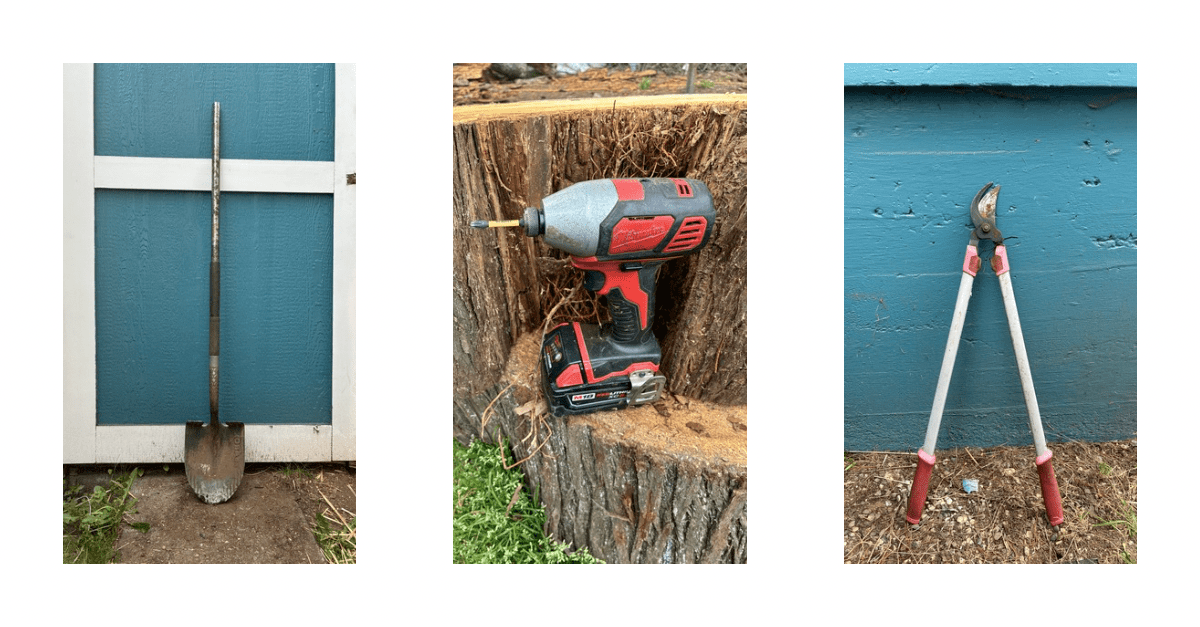
All homesteaders through out all time have undoubtedly had some variation of these three tools. We simply can’t live without ours & no homestead could function without these simple, dumb, but smart to use tools.
It’s tempting think that if something is simple: it’s boring, it couldn’t be as helpful as a trendy new piece of equipment, simple things can even dumb.
However homesteading is simpler lifestyle and many of us chose it for its simplicity in an overly complicated world.
We use these simpler tools because: 1) they are versatile & 2) they are low maintenance.
And that’s smart because:
1) Versatility = Maximum Utility
2) Low Maintenance= Less Stress+More Time
So sometimes the newest “Smart” equipment doesn’t actually save time, headache, or gets the job we need done. Then we all find ourselves reaching for the best tools:
The “dumb tools”.
We promise we can be found using our Dumb Smart tools everyday for multiple projects; and thankfully they don’t take too much effort to keep them in working condition.
Ok we’ll stop trying to sell you on the idea of Dumb Smart tools
Dumb Smart Tool #1 : Steel Handle Shovel
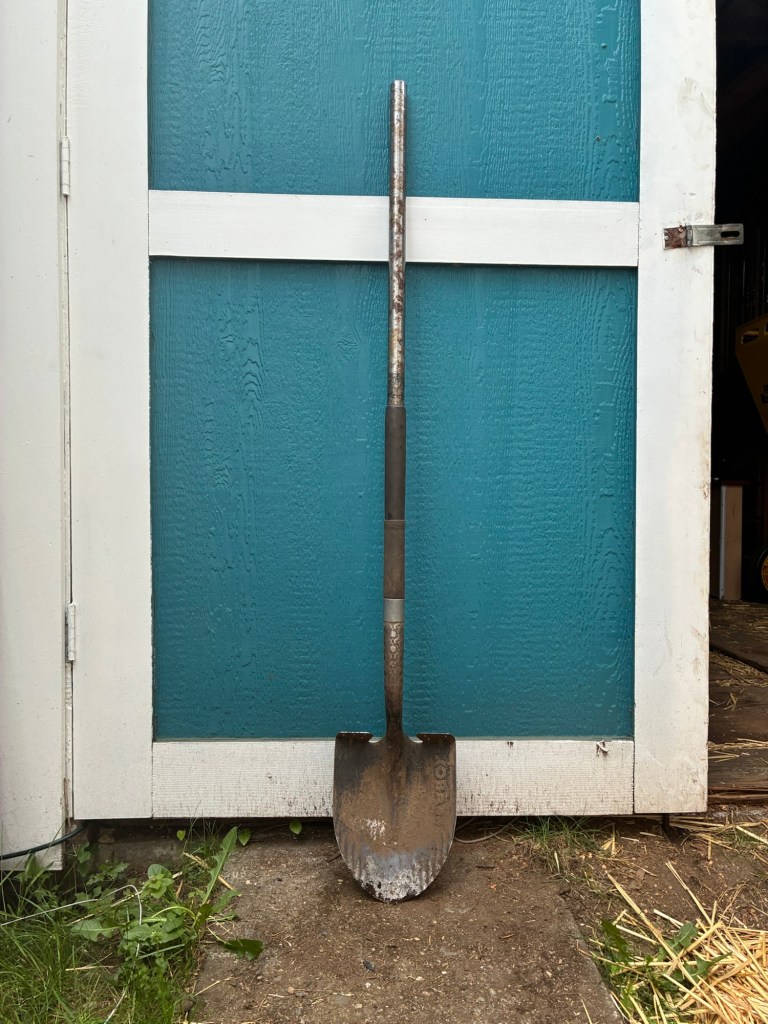
Or any steel handled, hand tool! Now don’t go out and buy a shovel because we know you already have one; but did you buy the wooden or fiberglass handled one?
Are you a head of the curve and already have a steel handled shovel? Go ahead and skip to the next tool; we don’t need to tell you why they’re great, you already know.
As for everyone else, your shovel will work just fine until the handle breaks. When it does though here’s why you should pick up a steel handled shovel:
Fiberglass handles are a joke; typically the shovel head can’t be removed and replaced. They are also typically more expensive than the wooden handled tools, all in the name of they last long because they a build stronger. In short they will eventually break & the whole tool will have to be thrown away anyway. Also, if they are left out in the weather they age rather quickly.
Both of us have broken a fiberglass tool before, it’s a little terrifying to see the wisps of fiberglass in the air even if when is an outside project.
Now wooden handles are better pricewise and for the fact that anyone can just remove the tools head & replace the wooden shaft. It’s fairly simple, and there are tools we have around our homestead that are wooden because we haven’t found a steel replacement yet. The fact the shafts are affordable to replace makes it a cost effective option in the mean time.
Please comment below if you’d be interested in a video & written tutorial on how to replace a tool head.
However, in the money you spend replacing shafts, finding a steel handled one pays for it self pretty quickly.
We also find ourselves using our steel handled shovel for more around the homestead & accomplishing familiar tasks more quickly, all because we aren’t afraid of the handle giving out halfway through a project.
We bought ours years ago from homedepot. When we can find a good comparable one or a company that makes lots of steel handled tools, we will be sure to include a link in this post.
For now head to your local hardware store & ask what steel handled tools they have available.
Supporting local Feed, hardware, or nursery does more for your homestead & community connections than anything!
Care & Maintenance
Steel shovels are great and will last a long time, even if they suffer abuse. However, they will last a lot longer if you keep them out of the rain.
We’ve owned ours for 5 years. Tanner bought it when we owned our own landscaping company 21-23. It was used for many things: cement mixing, pulling out overgrown plants, planting, irrigation projects. Now it’s used for a lot of the same things just less often, but it’s been put through a lot & it’s still in amazing shape.
Steel handled tools are just a seemingly indestructible & reliable homestead staple!
Dumb Smart Tool #2 : Loppers
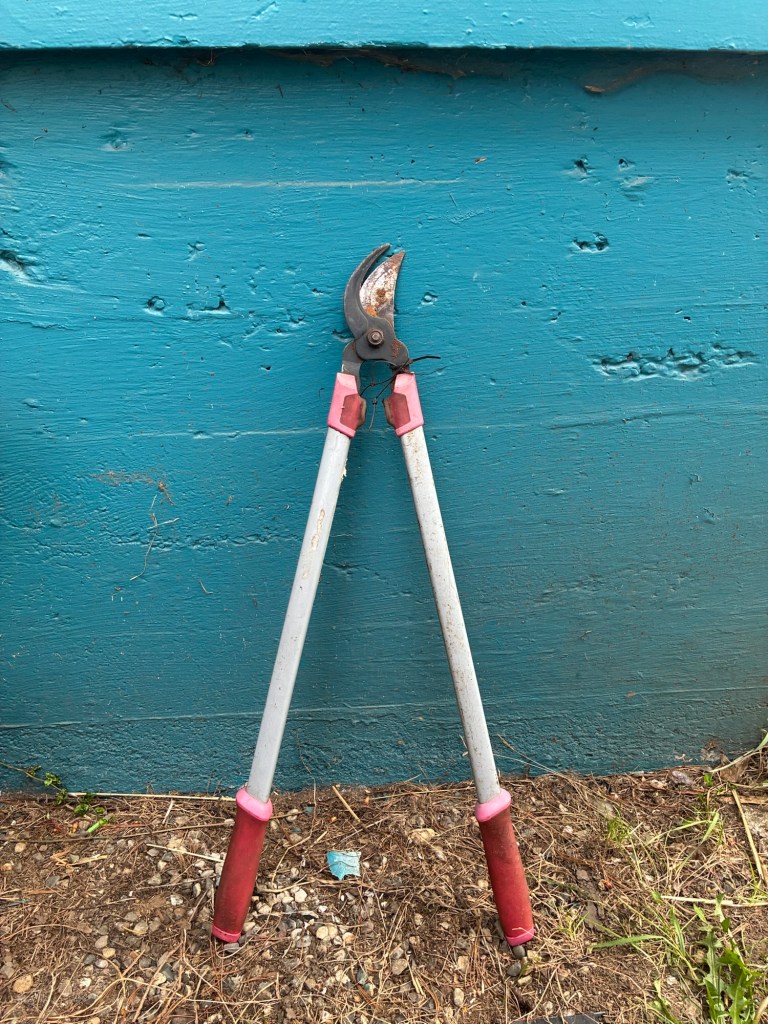
These are technically a long handled tool as well like the shovel. We’ve included a picture incase you grew up calling them something else.
Loppers help with annual pruning, but they also can help you cut roots when digging up plants, or a particularly stubborn taproot weed.
On our microhomestead we are attempting to achieve a colonial garden aesthetic. Often our loppers help us create wattles, trellises, obelisks, etc. for our garden.
They are also a great addition if you’re interested in making living willow structures. We are attempting to make a living fence for our homestead and we do plan on providing a tutorial in a year or two.
Another versatile use is specific to the PNW: blackberry management. We don’t love hedge trimmers; they tend to hurt plants when using them to prune, but they also make blackberry removal more of a headache.
Fun fact: blackberry plants can root from as small as a 1” cutting given the right circumstances. So a hedge trimmer will just chop up your canes. Unless you plan to come through and scorch, bring large equipment to scrape out the topsoil, or thoroughly inspect every square foot of your blackberry patch: your just mulching your blackberries & reseeding the area.
A set of loppers can help cut back the canes to the main body of the black berry so it can be ripped out by the root. Then they can be properly disposed of.
This method, of course, only works best for small overgrown areas. If you’re working with a space greater than 2000 sqft covered in blackberries; equipment or scorching may be necessary.
Reclaiming blackberry patches in the PNW is like gators in the south or fire season in California, it’s just a risk that has to be accounted for annually.
The loppers long handles are what makes them great for chopping through a branch over 1/2 in up to 2in. Tanner has on occasion been able to cut through larger branches or roots, but we can’t claim you’ll see the same results.
A pair of snips, aka. pruners – which is a hand tool that looks just like a mini pair of loppers, is also a staple at our homestead. This tool may look dumb, because it seems redundant when there’s a set of loppers on the homestead; but you’ll love them when working in tight spaces. Like rose bushes for example.
They are also a cut- flower enthusiasts best friend. If you aspire to have a cut-flower farm on your homestead, these are great for harvesting, pruning in spring to promote branching for more blooms, & deadheading.
They are also helpful for harvesting large gourds in the fall, trimming dried sunflower stalks to be used in the garden later, or any other “fine detail” horticultural work.
A secret that you may or may not know about the nursery industry:
They use these when harvesting cuttings of “mother plants” or the plant they propagate more plants they’d like to sell. It’s surprising how many box store plants are just clones of their mother plant. So snips/pruners are the best tool if you’d like your homestead to be the neighborhood nursery.
This is the brand we swear by, however, we will warn you they are about as expensive as the loppers. This brand makes so many variations on these snips, largely because each style has a different purpose; but the set that looks like a mini pair of loppers is the more versatile model in our opinion.
Care & Maintenance
With both Loppers & Snips/Pruners, you’ll need to wash & sharpen them occasionally.
This can be done with emery cloth and mineral oil. You can also sub fine grit sand paper for emery cloth should you need to. Some people have subbed olive oil for mineral oil, Tanners only concern from a horticultural standpoint is: the oils from the plants you’re cutting is leaving a patina on the blades already.
That is why you need to clean them to prevent the spread of disease, the oils and sugars dry to the blades after each cut. Debris, sugars, and oils build up over time & can become breeding grounds for disease.
The cleaning process helps sharpen the blades and mineral oil works best to clean while sharpening.
If you didn’t already know, yes plants do get sick from viruses, bacterial, and fungal infections just like we do. Prevention is always better than treatment.
However, treatment can be done to help save a plant & pruners are often the “scalpel” when treating plants. Keeping these tools in clean condition, leaves you prepared to prevent & treat plant diseases at anytime on your homestead.
If anyone has interested in a tutorial on cleaning pruners & loppers please let us know in comment below. We’d love to film & write that for you.
Overall, pruners & loppers will have regular use on anyone’s homestead.
Dumb Smart Tool #3 : A Screw Driver, but specifically a Cordless Impact Driver
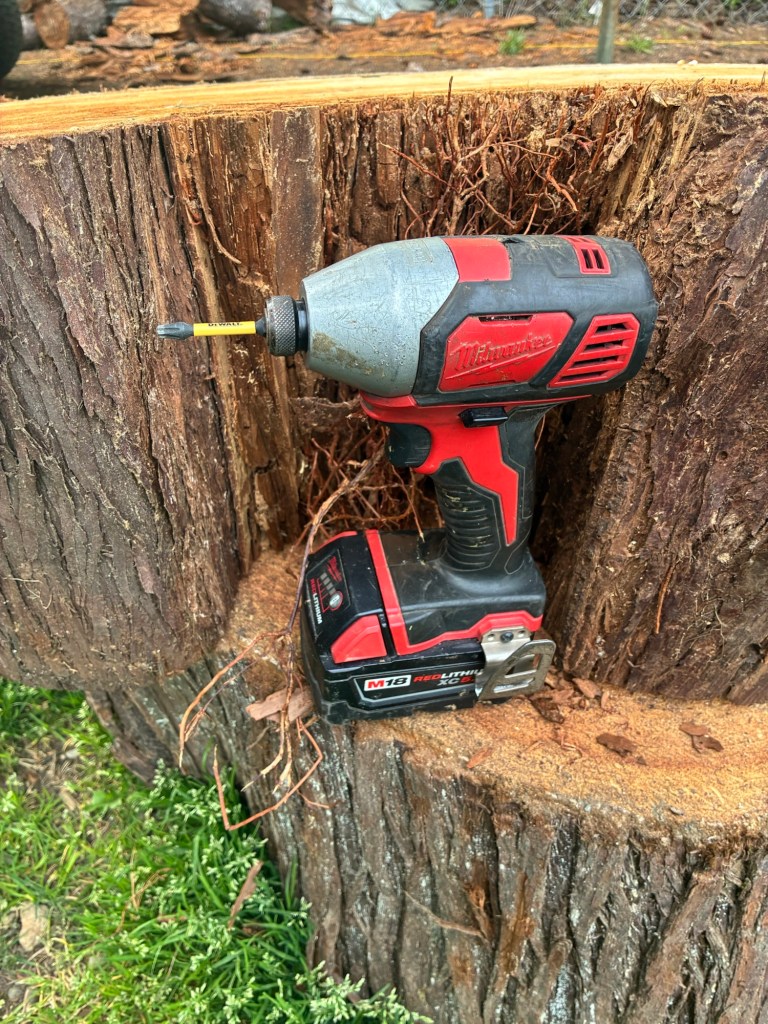
Now we started out the article by saying how trendy smart equipment can get in the way when a simpler dumb tool might be the smarter choice. Yes homesteaders have been using a screw driver of some kind for generations. Most often something hand powered. However, we need to clear the air here:
PLEASE buy fancy smart equipment that makes sense for your homestead!
There are many modern conveniences and inventions that are a smart tool to have on your homestead.
Modern convenience is a lovely part of life! Use the tools innovators create to help make tasks quicker, we deserve to enjoy time on our homesteads.
Sometimes renting fancy smart equipment is better than owning it. Other times it’s more headache in maintenance and costs.
We’ve bought a small wood chipper instead of planning to rent one occasionally. That was for reasons that made sense to us:
We plan on composting A LOT, and we had to cut down two GIANT holly trees. We are talking about around a century old holly trees here. Each with multiple leaders, so we had a small box truck sized pile of just the twigs that were less than an inch.
That purchase made sense to make. There will be similar equipment purchases for your unique homestead.
With that all said, a cordless impact driver is piece of power equipment we highly recommend.
There are many times where a traditional cordless drill is nice, but an impact driver makes things go faster & if I’m reaching above my head – and I’m only 5’5” mind you – to drive a screw in place it’s hard to give all the pressure my little arms can muster. The impact driver gives me a little extra umph.
Tanner also has had his arms stuck at a weird angle while doing a project – he’s not a small man, and while his forearms are great when needing to move something heavy they don’t fit great in tight spaces. The impact driver helps make whatever tight project go smooth, even when he can’t see what he’s doing he can feel what’s happening a little easier.
Impact drivers are very different from any other form of power drill. They have a clip system for the bits, and the driver shaft literally hammers in the screw the moment a screw becomes stuck & would traditionally strip out the head of the screw. The tapping helps the stop being hung up on whatever is preventing the screw from turning. It can also help eliminate the need for predrilling if combined with deck screws.
Picking up a large bucket of deck screws and not needing to pre-drill allows for any spur of the moment homestead project to get done quickly & they will last you a while.
Tanner has this obsession with Milwaukee tools, so almost all of our power tools are their brand. He loves the M18 battery system, having the batteries be interchangeable is a big deal to him & being able to have only a few chargers helps with the clutter in our mini barn. Are we affiliated with them? No. Would we love to be? Yes! Someday maybe that could be a possibility…
Care & Maintenance
Cordless impact drivers are a helpful tool that only requires charging the batteries. Ours has been a very low maintenance tool with high ROI over the years. We’re coming up on owning ours for 5 years in 2026, it’s still going strong despite being used daily in the rain, mud, and dropped more times than we’d like.
In Short
Having simple tools may seem dumb when so many specialized tools & inventions are out there; but simple is versatile, reliable, easy to maintain, and just plain smart.
Smart tools are the ones you use the most on your homestead. That equipment will look different homestead to homestead. If the ROI is worth it to you, then it’s worth the purchase. Sometimes a simple tool is all you need. Other times it’s ok to let the rental company take your money so they -not you- can take the time to maintain that piece of equipment. Then there are times where the smart thing to do is own the fancy equipment.
However a shovel, loppers/prunners, and a driver will always come in handy on a homestead.
If there’s anything we talked about above that you’d like to learn more about, let us know in the comments.
Maintenance is a part of the homestead life. Tool maintenance is a must, and a never ending chore; so if we can help you know how to maintain any tool please let us know!
What are your questions about any tool or tool maintenance? Comment below.
Rest assured if we don’t know the answer then we’ll find someone here in Shelton Washington or the surrounding area who does!

 Waddling Family Farm