Edible Landscape Design: Where your Existing Landscape & Gardening Meet, for Your Dinner!

Everyone is thinking about the rising costs of living, whether or not you’ve got the budget to update your landscaping.

If the current economic state of the world wasn’t reason enough to start gardening, then your weekly trip to the grocery store & gas pump probably has piqued your interest in growing your own food.

We are a DIY culture, and it doesn’t surprise us that we are seeing a resurgence in victory gardens, cottage gardens, kitchen gardens, & homesteading.

If you haven’t walked through the grocery store & thought at least once, “I’m not paying THAT!! I could make that myself,” then edible landscaping appeals to you for the altruistic motive of: plants make you happy. So really these high prices just means we all need a little more plant therapy!

What’s the best way to add some plant therapy? Increase the efficiency of your garden, and make your yard look refreshed on a budget.

Edible Landscaping!

This is a concept that has existed for centuries & was originally how we would garden. However, over time, ornamental landscapes became a symbol of wealth. Practical gardens became something that was tucked away, out of sight & eventually out of mind.

So while gardening is still the rage, edible landscaping is getting a shot in the spotlight. A chance to show you how efficient your property can be at growing your food; while still being aesthetically pleasing!
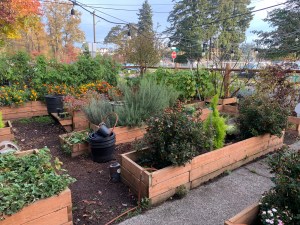
Raised beds at our old home in Tacoma

The Raised Bed Myth

Everyone loves raised beds! We do too! Papa Tanner is installing several different styles of raised garden beds through our property to help us showcase edible landscaping techniques, while we propagate plants for the nursery!

Our goal with our home is to not only grow plants to sell & share with our community; but to also show you how successful these methods are! You can come see them for yourself.

However, what most people see when they hear someone say raised beds is this:

4×8 foot wooden bed roughly 12-24 inches high. No matter how many beds anyone has they are all in one spot, the “garden”. Which is also cut off from the rest of the property’s landscaping.

THAT IS NOT THE IDEAL RAISED BED! Please don’t buy the myth. Raised beds are versatile & amazing. You really can use them anywhere in your landscape!

As wonderful as it is to have all your gardening in one area here’s a few things that makes having raised beds throughout your landscape even better:
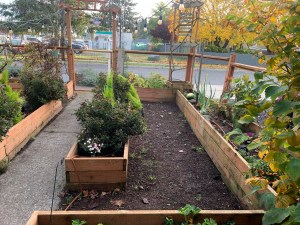
This is from our front yard in our old house in Tacoma, Washington
  1. Edible landscaping becomes the “theme” of your landscape, but it doesn’t just look functional. The beds can be structural, aesthetically pleasing & best of all WHATEVER SHAPE YOU WANT!
  2. There might be an existing irrigation system that waters your landscape; you can build your new beds into your existing landscape & take advantage of the automated irrigation by either adding to your drip or by taking advantage of overspray from your lawn.
  3. Raised beds can go in shady areas, & sometimes it can help the plants reach for more sunlight.
  4. Raised beds help best when you maximize planting, meaning you fill every square inch with plants. So when they are all over your yard, you’re producing so much more than if you kept your garden beds in the same spot.
  5. You can meet the sunlight requirements for every plant, and plant groups that will do well together in their respective shade, part shade, partial sun, and full sun environments.
  6. You can also keep well draining plants all in one beds, and “soggy” plants in another. Then water accordingly.
  7. When you grow in raised beds throughout the landscape you can create outdoor spaces/rooms. Adding large trellises and screens can create “walls” around your outdoor dinning space, that create privacy & you could then tell your dinner guests you made the food right from those garden “walls”!
  8. Don’t forget you can easily build in some seating into the side of your raised beds! Everyone loves a cute garden bench, building one into your raised bed gives you the Secret Garden feel everyone loves. We’d did that at our house in Tacoma. It was one of my favorite things to just sitting in the middle of the garden!
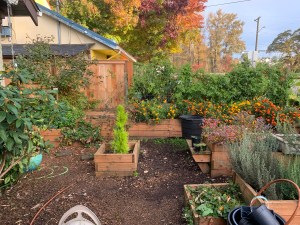
So in short, please use raised beds; throughout your yard!

Several intentionally placed, repetitive raised beds can literally elevate the aesthetic. Variation of height helps makes things easier to maintain, but it also makes things feel artistic & expensive.

The key here is repetition. Use the same materials for building your beds, and please repeat the raised beds at least 3 times. Otherwise it feels disjointed & haphazard.

Nothing makes a landscape feel more satisfying than intentional repetition. Making your raised beds repeat, gives you structure & spreads your garden throughout your property.

You don’t even have to alter your existing beds or irrigation systems. Strategically placing your beds to get the overspray from watering your lawn means that you’re able to cut down on your water bill.

This may mean you’ll need skinnier beds, but long skinny raised beds look expensive (but cost less) while also making it easier to weed.

Also don’t feel like you have to make all your edible landscaping raised! In fact the best part of switching to an edible landscape is interspersing your edible plants among your existing ornamental plants!

This allows you to slowly transition over time, only adding more edible plants as you feel capable of maintaining them.

Perennial Edibles

So how do you implement a strategic edible landscape design? Start with your perennials! They tend to be more structural & because they keep coming back year after year; transplanting them regularly doesn’t help them increase their harvest yields.

You can choose to replace existing ornamental plants with fruit trees, berry bushes, or fruiting vines. However, you can also always just add them alongside what you already have.

The idea is that these plants will always provide harvests for you throughout the year. So spreading them out can allow you to give them more space, as well as tailor their location on your property to give them all the cultivation requirements (ie sunlight, water, drainage, fertilizer/soil PH) they might need.

Just in case you didn’t know, not all garden plants require full sun. Lots do, but many perennial plants can be partial sun to even shade tolerant. There are a lot of traditional garden plants & native edibles that do great in the shade! So you’re missing out on a whole buffet of plant varieties that could be producing food in an area of your yard that you may have believed to be useless.

Companion Planting or Plant Guilds
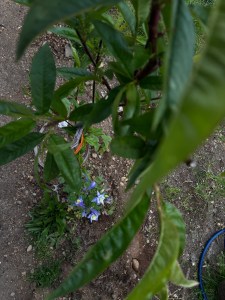
Another benefit of perennials & edible landscaping is using other plants as scaffolding for your annuals. Every perennial can become a living trellis if that is what your heart desires. The cottage-core apothecary aesthetic it creates is stunning!

Companion planting is when you plant combinations of different plants near each other, rather than in rows of all the same plant. They then all give benefits to one another. This in turn helps them all be healthier and yield more harvest!

Kind of like how the homesteading & farming life style was never meant to be lived alone. We are all meant to live in communities & be companions to each other.

Some examples of this could be:

A pea plant climbing on an apple tree.

Marigolds & basil planted near tomatoes to deter pests.

Onions, strawberries, comfrey, echinacea, and borage all planted around the base of a plumb tree.

Rhubarb, horseradish, and raspberries beneath a pomegranate tree.

Blueberries, evergreen huckleberries, and miner’s lettuce under an old conifer tree.

It is super easy to begin using your existing ornamental plants for the structure of your companion planting! That is edible landscaping at its finest; mixing ornamentals with edibles.

Perennials, ornamental or edible, will always be the best plants for permanence & structure in your landscape. Whether in your raised beds or in the ground, perennials are what give your landscape character year round.

You can also slowly plant new edible perennials to replace your ornamentals, like fruit trees, and begin your companion planting around each one.

The best part of perennial edibles is that you will always be able to plant annuals around them, and they will likely create organic matter through leaf litter, fallen fruit, etc. that you can use for compost for your annuals.

This is the kind of edible gardening for those who’d like to set it & forget it. Most people are afraid of the time commitment gardening could require. However, companion planting, especially with all perennials is the easiest maintenance for gardening in general.

Native Edible Perennials
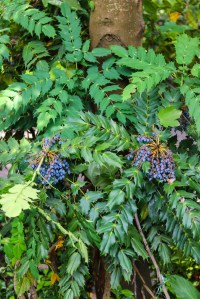
However, some of the best ornamental perennials & edible perennials are actually natives! They are uniquely evolved to your environment, and they give your garden everything it needs for creating a set it/forget it ecosystem.

That’s how nature does it; through forests!

Think of your edible landscape as a curated food forest that brings the PNW natives together with your favorite traditional garden fruits & veggies!

Pacific Northwest natives tend to LOVE SHADE! There’s a lot of it in the forests around here, if they hadn’t adapted there would be nothing on the forest floor. A lot of natives are edible too.

Shade can be the best, because it retains water in the soil/mulch. So you don’t have to water nearly as much.

If you have a shady property it makes sense why your gardening space might be those 4×8 raised beds in a row.

Though, these native plants could allow you to grow plants that native Americans have been eating for centuries. Even on the part of your property you may have deemed un-garden-able!

Annual Edible Plants
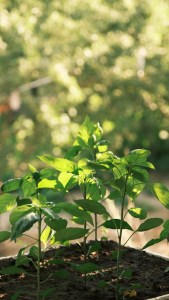
Annual Edibles become the plants beneath your fruit trees or along the edge of the planting bed next to your lawn. Overspray will water your annuals nicely, annuals tend to be very thirsty plants. They are in it for the sprint, not the long haul, so they tend to need the soil to retain moisture all throughout their growing season to bare fruit/go to seed.

These plants could also be native annuals or just prolific re-seeders! Native annuals tend to easily reseed, and require less water. However, any plant that produces tons of seeds that easily germinate can be super helpful additions to the edible landscape.

Almost like perennials, the easy reseeding makes plants come back yearly, and they will likely produce quite a harvest each time. More of the set it and forget mentality here!

However, they require a little more maintenance than perennials when they start to become weeds growing outside of their designated gardening spot.

They can also be an eyesore as they go to seed each year. It’s a whole process letting them flower, dry out, and release their seed. Sometimes you’ll need to help them disperse their seeds. This can cause a little pain to keep letting them reseed yearly, but it’s worth it if you want more harvests year over year.

Adding any plant that will continuously produce more harvests without much intervention is a win in your edible landscape.

Where to begin with your Edible landscape?

To sum up what we’ve gone over today, here are some steps to get you going in the right direction as you transition your existing landscape into a show stopping edible victory garden!

  1. Take stock of all the garden beds and irrigation set up you currently have.
  2. Find ways to incorporate edible additions to your existing landscape beds.
  3. Next create a plan for adding multiple raised planting beds; pick one material for at least 3 new planting beds. (ex: 3 wooden, 3 metal water trough, and/or 3 stone)
  4. Determine where they will go, how much sunlight, & how much drainage each one will require.
  5. Decide if you’d like to add trellises, benches, or other structures into your raised beds to make that outdoor space more aesthetically pleasing & useful.
  6. Draw what you’ve decided out & keep it somewhere you can reference it through out your remodel process.
  7. Begin your remodel one step at a time, using your hand drawn design to help you stick to your plan.
  8. If at any point this feels overwhelming, feel free to reach out to a landscape professional you know. If you don’t have any landscape professionals in your contacts, Papa Tanner works as a designer for Nature Perfect Landscape & Design in Olympia, WA. They offer consultations, design services, and installation.
  9. If you’re looking to source some edible plants near Shelton, WA come see us at the farmers market or contact us. We’d love to help you source plants, and meet likeminded people to help you transform your landscape into a homesteading victory garden. No matter the size of your property!

Please let us know in the comments if there was anything in this article you’d like us to cover in more detail!

We’ve barely scratched the surface on native edible plants, maximizing raised garden beds, edible landscape design, and victory gardens. This is really just an article meant to help you see how much you can do with your yard.

Waddling Family Farms really believes the size of your homestead doesn’t matter as much as the goals you are hoping to accomplish and the community you’re apart of. Anything is possible with the right resources and support!

We hope to be that for you, so please, again let us know what you’d like to learn more about!
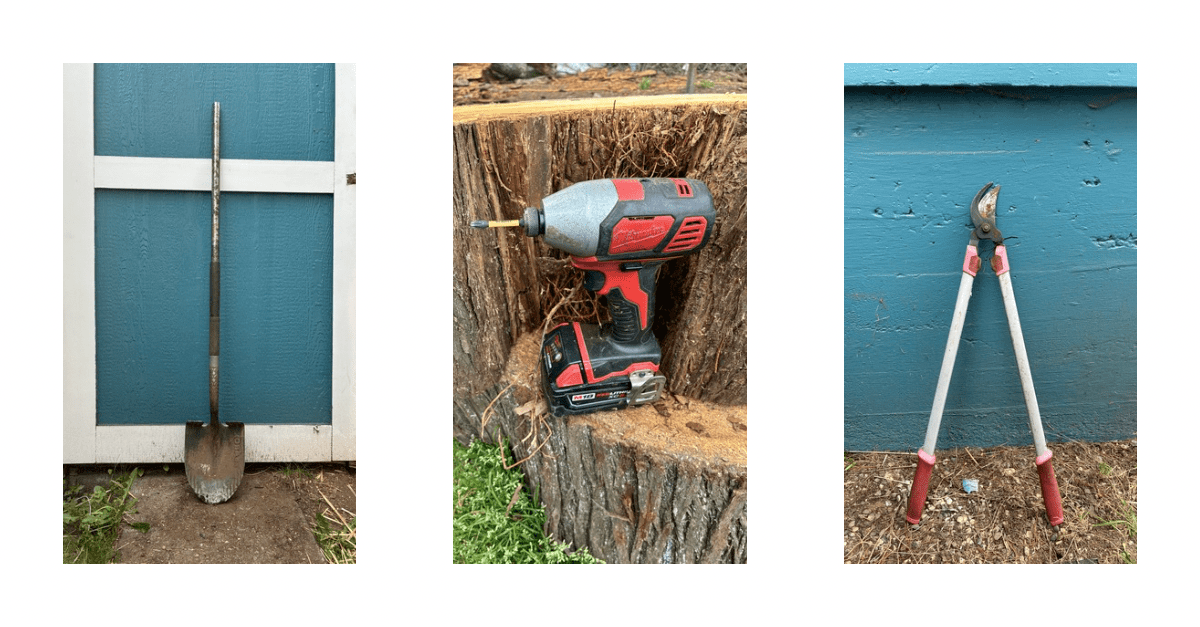
The Dumb but Smart Tools We Constantly Use On Our Homestead

All homesteaders through out all time have undoubtedly had some variation of these three tools. We simply can’t live without ours & no homestead could function without these simple, dumb, but smart to use tools.

It’s tempting think that if something is simple: it’s boring, it couldn’t be as helpful as a trendy new piece of equipment, simple things can even dumb.

However homesteading is simpler lifestyle and many of us chose it for its simplicity in an overly complicated world.

We use these simpler tools because: 1) they are versatile & 2) they are low maintenance.

And that’s smart because:

1) Versatility = Maximum Utility

2) Low Maintenance= Less Stress+More Time

So sometimes the newest “Smart” equipment doesn’t actually save time, headache, or gets the job we need done. Then we all find ourselves reaching for the best tools:

The “dumb tools”.

We promise we can be found using our Dumb Smart tools everyday for multiple projects; and thankfully they don’t take too much effort to keep them in working condition.

Ok we’ll stop trying to sell you on the idea of Dumb Smart tools

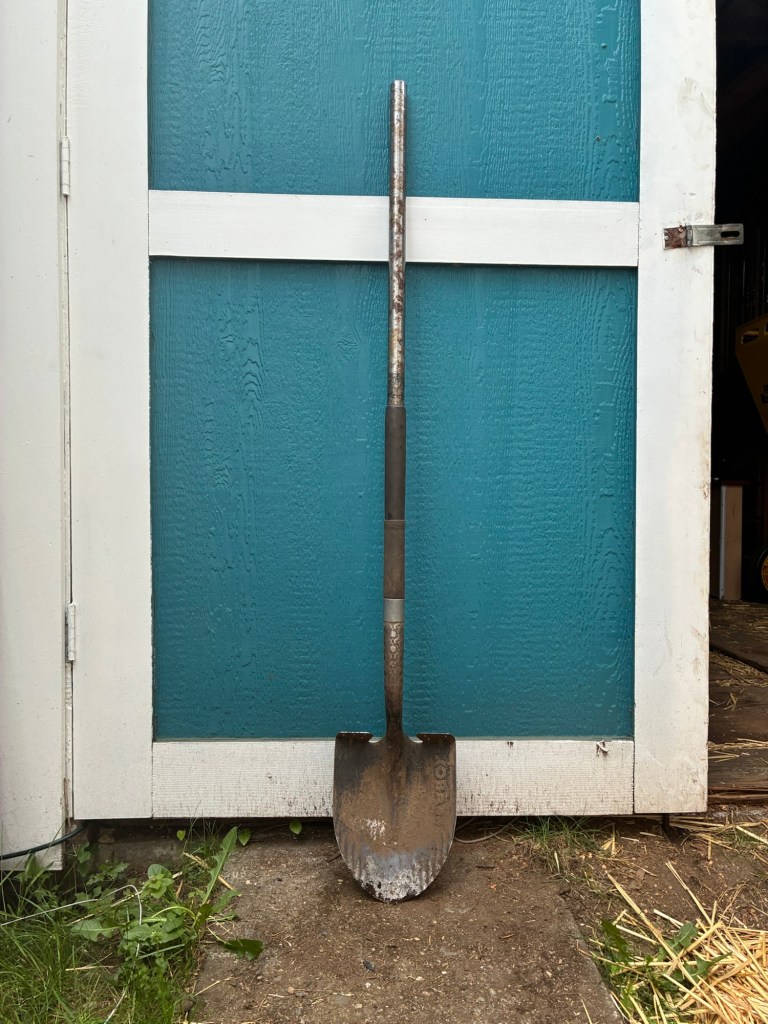
Dumb Smart Tool #1 : Steel Handle Shovel

Or any steel handled, hand tool! Now don’t go out and buy a shovel because we know you already have one; but did you buy the wooden or fiberglass handled one?

Are you a head of the curve and already have a steel handled shovel? Go ahead and skip to the next tool; we don’t need to tell you why they’re great, you already know.

As for everyone else, your shovel will work just fine until the handle breaks. When it does though here’s why you should pick up a steel handled shovel:

Fiberglass handles are a joke; typically the shovel head can’t be removed and replaced. They are also typically more expensive than the wooden handled tools, all in the name of they last long because they a build stronger. In short they will eventually break & the whole tool will have to be thrown away anyway. Also, if they are left out in the weather they age rather quickly.

Both of us have broken a fiberglass tool before, it’s a little terrifying to see the wisps of fiberglass in the air even if when is an outside project.

Now wooden handles are better pricewise and for the fact that anyone can just remove the tools head & replace the wooden shaft. It’s fairly simple, and there are tools we have around our homestead that are wooden because we haven’t found a steel replacement yet. The fact the shafts are affordable to replace makes it a cost effective option in the mean time.

Please comment below if you’d be interested in a video & written tutorial on how to replace a tool head.

However, in the money you spend replacing shafts, finding a steel handled one pays for it self pretty quickly.

We also find ourselves using our steel handled shovel for more around the homestead & accomplishing familiar tasks more quickly, all because we aren’t afraid of the handle giving out halfway through a project.

We bought ours years ago from homedepot. When we can find a good comparable one or a company that makes lots of steel handled tools, we will be sure to include a link in this post.

For now head to your local hardware store & ask what steel handled tools they have available.

Supporting local Feed, hardware, or nursery does more for your homestead & community connections than anything!

Care & Maintenance

Steel shovels are great and will last a long time, even if they suffer abuse. However, they will last a lot longer if you keep them out of the rain.

We’ve owned ours for 5 years. Tanner bought it when we owned our own landscaping company 21-23. It was used for many things: cement mixing, pulling out overgrown plants, planting, irrigation projects. Now it’s used for a lot of the same things just less often, but it’s been put through a lot & it’s still in amazing shape.

Steel handled tools are just a seemingly indestructible & reliable homestead staple!

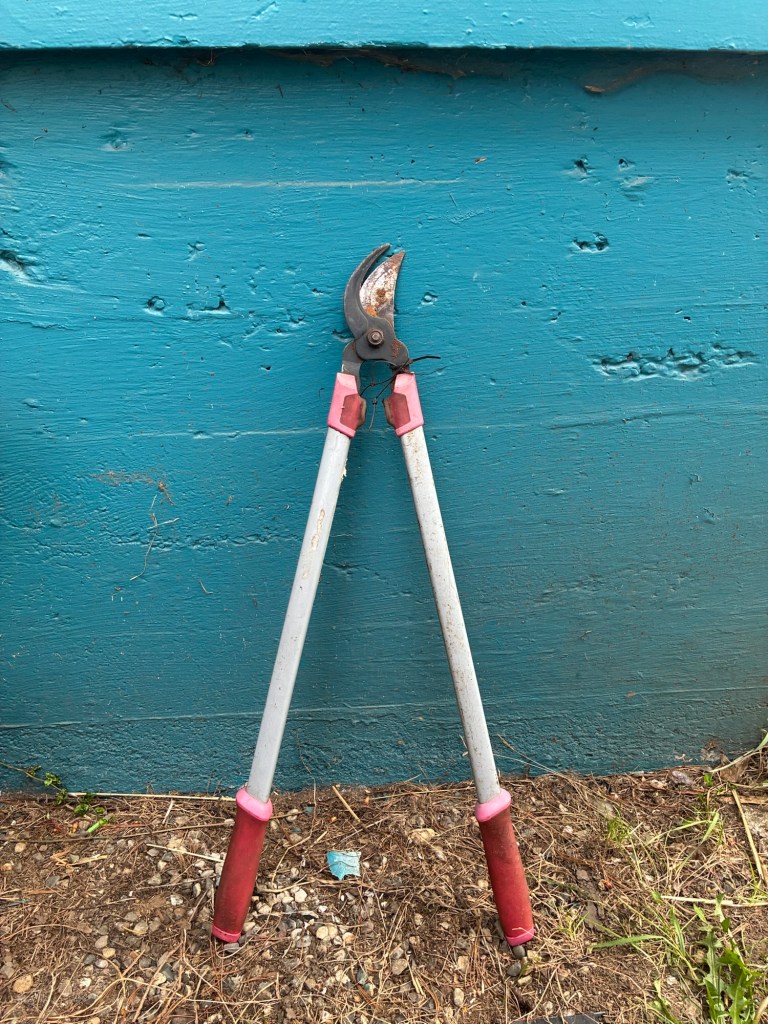
Dumb Smart Tool #2 : Loppers

These are technically a long handled tool as well like the shovel. We’ve included a picture incase you grew up calling them something else.

Loppers help with annual pruning, but they also can help you cut roots when digging up plants, or a particularly stubborn taproot weed.

On our microhomestead we are attempting to achieve a colonial garden aesthetic. Often our loppers help us create wattles, trellises, obelisks, etc. for our garden.

They are also a great addition if you’re interested in making living willow structures. We are attempting to make a living fence for our homestead and we do plan on providing a tutorial in a year or two.

Another versatile use is specific to the PNW: blackberry management. We don’t love hedge trimmers; they tend to hurt plants when using them to prune, but they also make blackberry removal more of a headache.

Fun fact: blackberry plants can root from as small as a 1” cutting given the right circumstances. So a hedge trimmer will just chop up your canes. Unless you plan to come through and scorch, bring large equipment to scrape out the topsoil, or thoroughly inspect every square foot of your blackberry patch: your just mulching your blackberries & reseeding the area.

A set of loppers can help cut back the canes to the main body of the black berry so it can be ripped out by the root. Then they can be properly disposed of.

This method, of course, only works best for small overgrown areas. If you’re working with a space greater than 2000 sqft covered in blackberries; equipment or scorching may be necessary.

Reclaiming blackberry patches in the PNW is like gators in the south or fire season in California, it’s just a risk that has to be accounted for annually.

The loppers long handles are what makes them great for chopping through a branch over 1/2 in up to 2in. Tanner has on occasion been able to cut through larger branches or roots, but we can’t claim you’ll see the same results.

A pair of snips, aka. pruners – which is a hand tool that looks just like a mini pair of loppers, is also a staple at our homestead. This tool may look dumb, because it seems redundant when there’s a set of loppers on the homestead; but you’ll love them when working in tight spaces. Like rose bushes for example.

They are also a cut- flower enthusiasts best friend. If you aspire to have a cut-flower farm on your homestead, these are great for harvesting, pruning in spring to promote branching for more blooms, & deadheading.

They are also helpful for harvesting large gourds in the fall, trimming dried sunflower stalks to be used in the garden later, or any other “fine detail” horticultural work.

A secret that you may or may not know about the nursery industry:

They use these when harvesting cuttings of “mother plants” or the plant they propagate more plants they’d like to sell. It’s surprising how many box store plants are just clones of their mother plant. So snips/pruners are the best tool if you’d like your homestead to be the neighborhood nursery.

This is the brand we swear by, however, we will warn you they are about as expensive as the loppers. This brand makes so many variations on these snips, largely because each style has a different purpose; but the set that looks like a mini pair of loppers is the more versatile model in our opinion.

Care & Maintenance

With both Loppers & Snips/Pruners, you’ll need to wash & sharpen them occasionally.

This can be done with emery cloth and mineral oil. You can also sub fine grit sand paper for emery cloth should you need to. Some people have subbed olive oil for mineral oil, Tanners only concern from a horticultural standpoint is: the oils from the plants you’re cutting is leaving a patina on the blades already.

That is why you need to clean them to prevent the spread of disease, the oils and sugars dry to the blades after each cut. Debris, sugars, and oils build up over time & can become breeding grounds for disease.

The cleaning process helps sharpen the blades and mineral oil works best to clean while sharpening.

If you didn’t already know, yes plants do get sick from viruses, bacterial, and fungal infections just like we do. Prevention is always better than treatment.

However, treatment can be done to help save a plant & pruners are often the “scalpel” when treating plants. Keeping these tools in clean condition, leaves you prepared to prevent & treat plant diseases at anytime on your homestead.

If anyone has interested in a tutorial on cleaning pruners & loppers please let us know in comment below. We’d love to film & write that for you.

Overall, pruners & loppers will have regular use on anyone’s homestead.

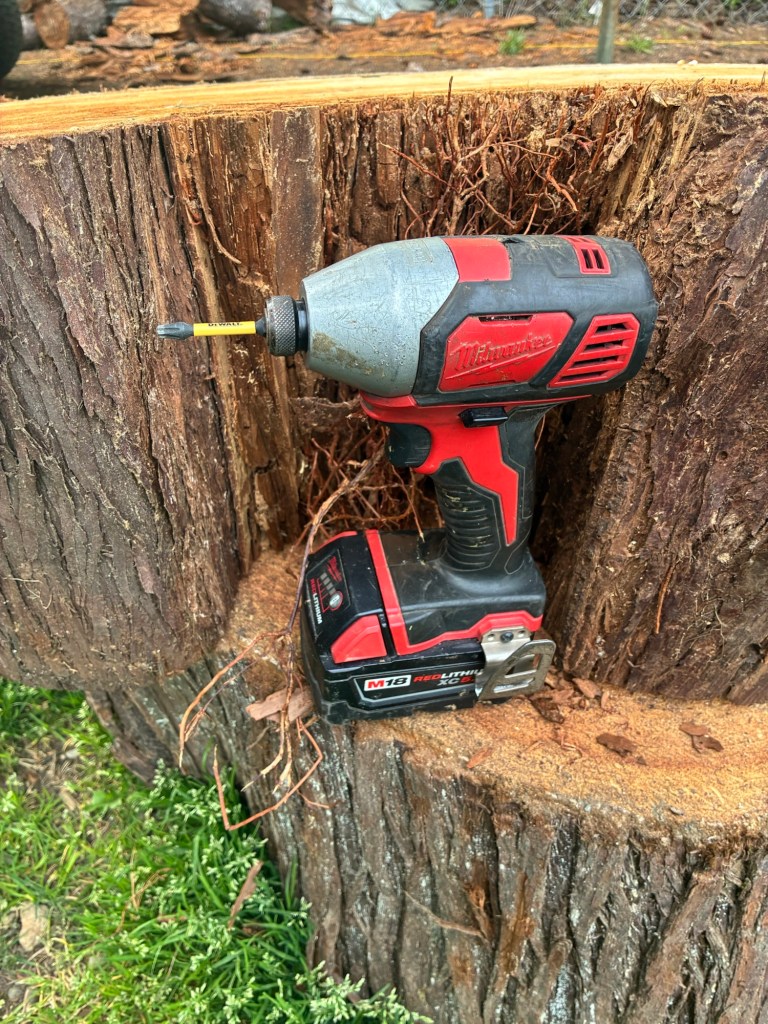
Dumb Smart Tool #3 : A Screw Driver, but specifically a Cordless Impact Driver

Now we started out the article by saying how trendy smart equipment can get in the way when a simpler dumb tool might be the smarter choice. Yes homesteaders have been using a screw driver of some kind for generations. Most often something hand powered. However, we need to clear the air here:

PLEASE buy fancy smart equipment that makes sense for your homestead!

There are many modern conveniences and inventions that are a smart tool to have on your homestead.

Modern convenience is a lovely part of life! Use the tools innovators create to help make tasks quicker, we deserve to enjoy time on our homesteads.

Sometimes renting fancy smart equipment is better than owning it. Other times it’s more headache in maintenance and costs.

We’ve bought a small wood chipper instead of planning to rent one occasionally. That was for reasons that made sense to us:

We plan on composting A LOT, and we had to cut down two GIANT holly trees. We are talking about around a century old holly trees here. Each with multiple leaders, so we had a small box truck sized pile of just the twigs that were less than an inch.

That purchase made sense to make. There will be similar equipment purchases for your unique homestead.

With that all said, a cordless impact driver is piece of power equipment we highly recommend.

There are many times where a traditional cordless drill is nice, but an impact driver makes things go faster & if I’m reaching above my head – and I’m only 5’5” mind you – to drive a screw in place it’s hard to give all the pressure my little arms can muster. The impact driver gives me a little extra umph.

Tanner also has had his arms stuck at a weird angle while doing a project – he’s not a small man, and while his forearms are great when needing to move something heavy they don’t fit great in tight spaces. The impact driver helps make whatever tight project go smooth, even when he can’t see what he’s doing he can feel what’s happening a little easier.

Impact drivers are very different from any other form of power drill. They have a clip system for the bits, and the driver shaft literally hammers in the screw the moment a screw becomes stuck & would traditionally strip out the head of the screw. The tapping helps the stop being hung up on whatever is preventing the screw from turning. It can also help eliminate the need for predrilling if combined with deck screws.

Picking up a large bucket of deck screws and not needing to pre-drill allows for any spur of the moment homestead project to get done quickly & they will last you a while.

Tanner has this obsession with Milwaukee tools, so almost all of our power tools are their brand. He loves the M18 battery system, having the batteries be interchangeable is a big deal to him & being able to have only a few chargers helps with the clutter in our mini barn. Are we affiliated with them? No. Would we love to be? Yes! Someday maybe that could be a possibility…

Care & Maintenance

Cordless impact drivers are a helpful tool that only requires charging the batteries. Ours has been a very low maintenance tool with high ROI over the years. We’re coming up on owning ours for 5 years in 2026, it’s still going strong despite being used daily in the rain, mud, and dropped more times than we’d like.

In Short

Having simple tools may seem dumb when so many specialized tools & inventions are out there; but simple is versatile, reliable, easy to maintain, and just plain smart.

Smart tools are the ones you use the most on your homestead. That equipment will look different homestead to homestead. If the ROI is worth it to you, then it’s worth the purchase. Sometimes a simple tool is all you need. Other times it’s ok to let the rental company take your money so they -not you- can take the time to maintain that piece of equipment. Then there are times where the smart thing to do is own the fancy equipment.

However a shovel, loppers/prunners, and a driver will always come in handy on a homestead.

If there’s anything we talked about above that you’d like to learn more about, let us know in the comments.

Maintenance is a part of the homestead life. Tool maintenance is a must, and a never ending chore; so if we can help you know how to maintain any tool please let us know!

What are your questions about any tool or tool maintenance? Comment below.

Rest assured if we don’t know the answer then we’ll find someone here in Shelton Washington or the surrounding area who does!

Opening Day @ Shelton Farmers Market 5/2/2026

Come Join Us for the Shelton Farmers Market Opening Day May 2nd 2026, 10am-3pm. Located at:

425 West Cota St, Shelton WA 98584

We will be spreading announcements for community events and other local homesteading activities throughout our educational articles.

When we are able to attend them, we will be able to update the post with pictures & insights from attending.

We are excited to share what is happening around our area that can help build your homesteading community.

There will also be a running promotion at each of our farmers markets until further notice.

Follow Any of Our Social Media Channels or View Any of Our Articles. Then Comment on A Social Media Post or Our Website Articles.
You Can Receive a FREE Product From Our Farmers Market Stall!

– Discover Waddling Family Farm Promo –

Just mention that you’ve commented and what your social handle is – so we can reply – or which blog comment is yours (especially if you commented anonymously) and we will be happy to share the free product of the day with you!

In addition to our marketing promotion we will have an ongoing promotion for any returned plant start pots.

For Every Waddling Family Farm Plant Start Pot You Return, You Will Receive $1 Off Your Purchase!

– Waddling Family Farm
Please Return Our Plant Pots Discount –

This promotion only applies to our black pots being returned back to us after a previous purchase from us. We thank you for being willing to donate pots; but our black pots are the only items that we are willing to give a $1 off per pot returned.

Purchase is required to receive our return discount, and sadly the purchase total after discount does need to exceed $5 due to purchase fees incurred from our Point of Sale service.

We will also recognize our pots; and hope to eventually recognize you as a repeat customer!

Building a homesteading community here is important to us, and we hope to make a positive difference in our community.

We believe very strongly that farming and homesteading is meant to be a community experience. Our goal is to help connect you with the community and resources you need to be successful no matter what size your farm or homestead is!

When you’re down at the market:

Look for our Sign!

We will Update the photo with a photo of our booth set up soon so we are easier to recognize!