Everyone is thinking about the rising costs of living, whether or not you’ve got the budget to update your landscaping.
If the current economic state of the world wasn’t reason enough to start gardening, then your weekly trip to the grocery store & gas pump probably has piqued your interest in growing your own food.
We are a DIY culture, and it doesn’t surprise us that we are seeing a resurgence in victory gardens, cottage gardens, kitchen gardens, & homesteading.
If you haven’t walked through the grocery store & thought at least once, “I’m not paying THAT!! I could make that myself,” then edible landscaping appeals to you for the altruistic motive of: plants make you happy. So really these high prices just means we all need a little more plant therapy!
What’s the best way to add some plant therapy? Increase the efficiency of your garden, and make your yard look refreshed on a budget.
Edible Landscaping!

This is a concept that has existed for centuries & was originally how we would garden. However, over time, ornamental landscapes became a symbol of wealth. Practical gardens became something that was tucked away, out of sight & eventually out of mind.
So while gardening is still the rage, edible landscaping is getting a shot in the spotlight. A chance to show you how efficient your property can be at growing your food; while still being aesthetically pleasing!
The Raised Bed Myth
Everyone loves raised beds! We do too! Papa Tanner is installing several different styles of raised garden beds through our property to help us showcase edible landscaping techniques, while we propagate plants for the nursery!
Our goal with our home is to not only grow plants to sell & share with our community; but to also show you how successful these methods are! You can come see them for yourself.
However, what most people see when they hear someone say raised beds is this:
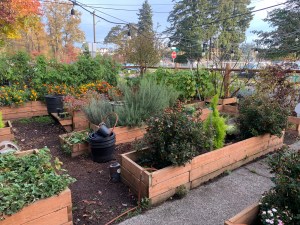
4×8 foot wooden bed roughly 12-24 inches high. No matter how many beds anyone has they are all in one spot, the “garden”. Which is also cut off from the rest of the property’s landscaping.
THAT IS NOT THE IDEAL RAISED BED! Please don’t buy the myth. Raised beds are versatile & amazing. You really can use them anywhere in your landscape!
As wonderful as it is to have all your gardening in one area here’s a few things that makes having raised beds throughout your landscape even better:
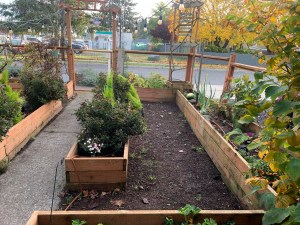
- Edible landscaping becomes the “theme” of your landscape, but it doesn’t just look functional. The beds can be structural, aesthetically pleasing & best of all WHATEVER SHAPE YOU WANT!
- There might be an existing irrigation system that waters your landscape; you can build your new beds into your existing landscape & take advantage of the automated irrigation by either adding to your drip or by taking advantage of overspray from your lawn.
- Raised beds can go in shady areas, & sometimes it can help the plants reach for more sunlight.
- Raised beds help best when you maximize planting, meaning you fill every square inch with plants. So when they are all over your yard, you’re producing so much more than if you kept your garden beds in the same spot.
- You can meet the sunlight requirements for every plant, and plant groups that will do well together in their respective shade, part shade, partial sun, and full sun environments.
- You can also keep well draining plants all in one beds, and “soggy” plants in another. Then water accordingly.
- When you grow in raised beds throughout the landscape you can create outdoor spaces/rooms. Adding large trellises and screens can create “walls” around your outdoor dinning space, that create privacy & you could then tell your dinner guests you made the food right from those garden “walls”!
- Don’t forget you can easily build in some seating into the side of your raised beds! Everyone loves a cute garden bench, building one into your raised bed gives you the Secret Garden feel everyone loves. We’d did that at our house in Tacoma. It was one of my favorite things to just sitting in the middle of the garden!
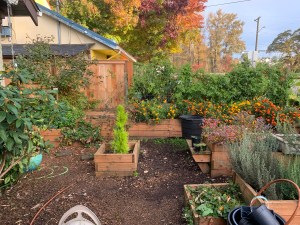
So in short, please use raised beds; throughout your yard!
Several intentionally placed, repetitive raised beds can literally elevate the aesthetic. Variation of height helps makes things easier to maintain, but it also makes things feel artistic & expensive.
The key here is repetition. Use the same materials for building your beds, and please repeat the raised beds at least 3 times. Otherwise it feels disjointed & haphazard.
Nothing makes a landscape feel more satisfying than intentional repetition. Making your raised beds repeat, gives you structure & spreads your garden throughout your property.
You don’t even have to alter your existing beds or irrigation systems. Strategically placing your beds to get the overspray from watering your lawn means that you’re able to cut down on your water bill.
This may mean you’ll need skinnier beds, but long skinny raised beds look expensive (but cost less) while also making it easier to weed.
Also don’t feel like you have to make all your edible landscaping raised! In fact the best part of switching to an edible landscape is interspersing your edible plants among your existing ornamental plants!
This allows you to slowly transition over time, only adding more edible plants as you feel capable of maintaining them.
Perennial Edibles
So how do you implement a strategic edible landscape design? Start with your perennials! They tend to be more structural & because they keep coming back year after year; transplanting them regularly doesn’t help them increase their harvest yields.
You can choose to replace existing ornamental plants with fruit trees, berry bushes, or fruiting vines. However, you can also always just add them alongside what you already have.
The idea is that these plants will always provide harvests for you throughout the year. So spreading them out can allow you to give them more space, as well as tailor their location on your property to give them all the cultivation requirements (ie sunlight, water, drainage, fertilizer/soil PH) they might need.
Just in case you didn’t know, not all garden plants require full sun. Lots do, but many perennial plants can be partial sun to even shade tolerant. There are a lot of traditional garden plants & native edibles that do great in the shade! So you’re missing out on a whole buffet of plant varieties that could be producing food in an area of your yard that you may have believed to be useless.
Companion Planting or Plant Guilds
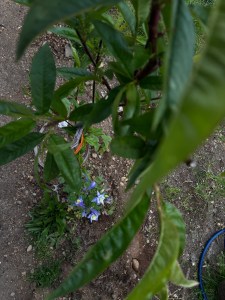
Another benefit of perennials & edible landscaping is using other plants as scaffolding for your annuals. Every perennial can become a living trellis if that is what your heart desires. The cottage-core apothecary aesthetic it creates is stunning!
Companion planting is when you plant combinations of different plants near each other, rather than in rows of all the same plant. They then all give benefits to one another. This in turn helps them all be healthier and yield more harvest!
Kind of like how the homesteading & farming life style was never meant to be lived alone. We are all meant to live in communities & be companions to each other.
Some examples of this could be:
A pea plant climbing on an apple tree.
Marigolds & basil planted near tomatoes to deter pests.
Onions, strawberries, comfrey, echinacea, and borage all planted around the base of a plumb tree.
Rhubarb, horseradish, and raspberries beneath a pomegranate tree.
Blueberries, evergreen huckleberries, and miner’s lettuce under an old conifer tree.
It is super easy to begin using your existing ornamental plants for the structure of your companion planting! That is edible landscaping at its finest; mixing ornamentals with edibles.
Perennials, ornamental or edible, will always be the best plants for permanence & structure in your landscape. Whether in your raised beds or in the ground, perennials are what give your landscape character year round.
You can also slowly plant new edible perennials to replace your ornamentals, like fruit trees, and begin your companion planting around each one.
The best part of perennial edibles is that you will always be able to plant annuals around them, and they will likely create organic matter through leaf litter, fallen fruit, etc. that you can use for compost for your annuals.
This is the kind of edible gardening for those who’d like to set it & forget it. Most people are afraid of the time commitment gardening could require. However, companion planting, especially with all perennials is the easiest maintenance for gardening in general.
Native Edible Perennials
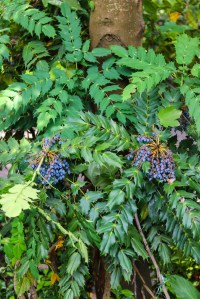
However, some of the best ornamental perennials & edible perennials are actually natives! They are uniquely evolved to your environment, and they give your garden everything it needs for creating a set it/forget it ecosystem.
That’s how nature does it; through forests!
Think of your edible landscape as a curated food forest that brings the PNW natives together with your favorite traditional garden fruits & veggies!
Pacific Northwest natives tend to LOVE SHADE! There’s a lot of it in the forests around here, if they hadn’t adapted there would be nothing on the forest floor. A lot of natives are edible too.
Shade can be the best, because it retains water in the soil/mulch. So you don’t have to water nearly as much.
If you have a shady property it makes sense why your gardening space might be those 4×8 raised beds in a row.
Though, these native plants could allow you to grow plants that native Americans have been eating for centuries. Even on the part of your property you may have deemed un-garden-able!
Annual Edible Plants
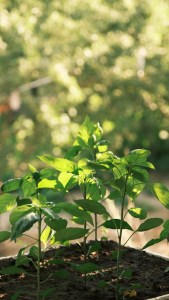
Annual Edibles become the plants beneath your fruit trees or along the edge of the planting bed next to your lawn. Overspray will water your annuals nicely, annuals tend to be very thirsty plants. They are in it for the sprint, not the long haul, so they tend to need the soil to retain moisture all throughout their growing season to bare fruit/go to seed.
These plants could also be native annuals or just prolific re-seeders! Native annuals tend to easily reseed, and require less water. However, any plant that produces tons of seeds that easily germinate can be super helpful additions to the edible landscape.
Almost like perennials, the easy reseeding makes plants come back yearly, and they will likely produce quite a harvest each time. More of the set it and forget mentality here!
However, they require a little more maintenance than perennials when they start to become weeds growing outside of their designated gardening spot.
They can also be an eyesore as they go to seed each year. It’s a whole process letting them flower, dry out, and release their seed. Sometimes you’ll need to help them disperse their seeds. This can cause a little pain to keep letting them reseed yearly, but it’s worth it if you want more harvests year over year.
Adding any plant that will continuously produce more harvests without much intervention is a win in your edible landscape.
Where to begin with your Edible landscape?

To sum up what we’ve gone over today, here are some steps to get you going in the right direction as you transition your existing landscape into a show stopping edible victory garden!
- Take stock of all the garden beds and irrigation set up you currently have.
- Find ways to incorporate edible additions to your existing landscape beds.
- Next create a plan for adding multiple raised planting beds; pick one material for at least 3 new planting beds. (ex: 3 wooden, 3 metal water trough, and/or 3 stone)
- Determine where they will go, how much sunlight, & how much drainage each one will require.
- Decide if you’d like to add trellises, benches, or other structures into your raised beds to make that outdoor space more aesthetically pleasing & useful.
- Draw what you’ve decided out & keep it somewhere you can reference it through out your remodel process.
- Begin your remodel one step at a time, using your hand drawn design to help you stick to your plan.
- If at any point this feels overwhelming, feel free to reach out to a landscape professional you know. If you don’t have any landscape professionals in your contacts, Papa Tanner works as a designer for Nature Perfect Landscape & Design in Olympia, WA. They offer consultations, design services, and installation.
- If you’re looking to source some edible plants near Shelton, WA come see us at the farmers market or contact us. We’d love to help you source plants, and meet likeminded people to help you transform your landscape into a homesteading victory garden. No matter the size of your property!
Please let us know in the comments if there was anything in this article you’d like us to cover in more detail!
We’ve barely scratched the surface on native edible plants, maximizing raised garden beds, edible landscape design, and victory gardens. This is really just an article meant to help you see how much you can do with your yard.
Waddling Family Farms really believes the size of your homestead doesn’t matter as much as the goals you are hoping to accomplish and the community you’re apart of. Anything is possible with the right resources and support!
We hope to be that for you, so please, again let us know what you’d like to learn more about!

 Waddling Family Farm